STOCKHOLM | SWEDEN
How Appletrees went from a single-product startup to an essential Swedish brand
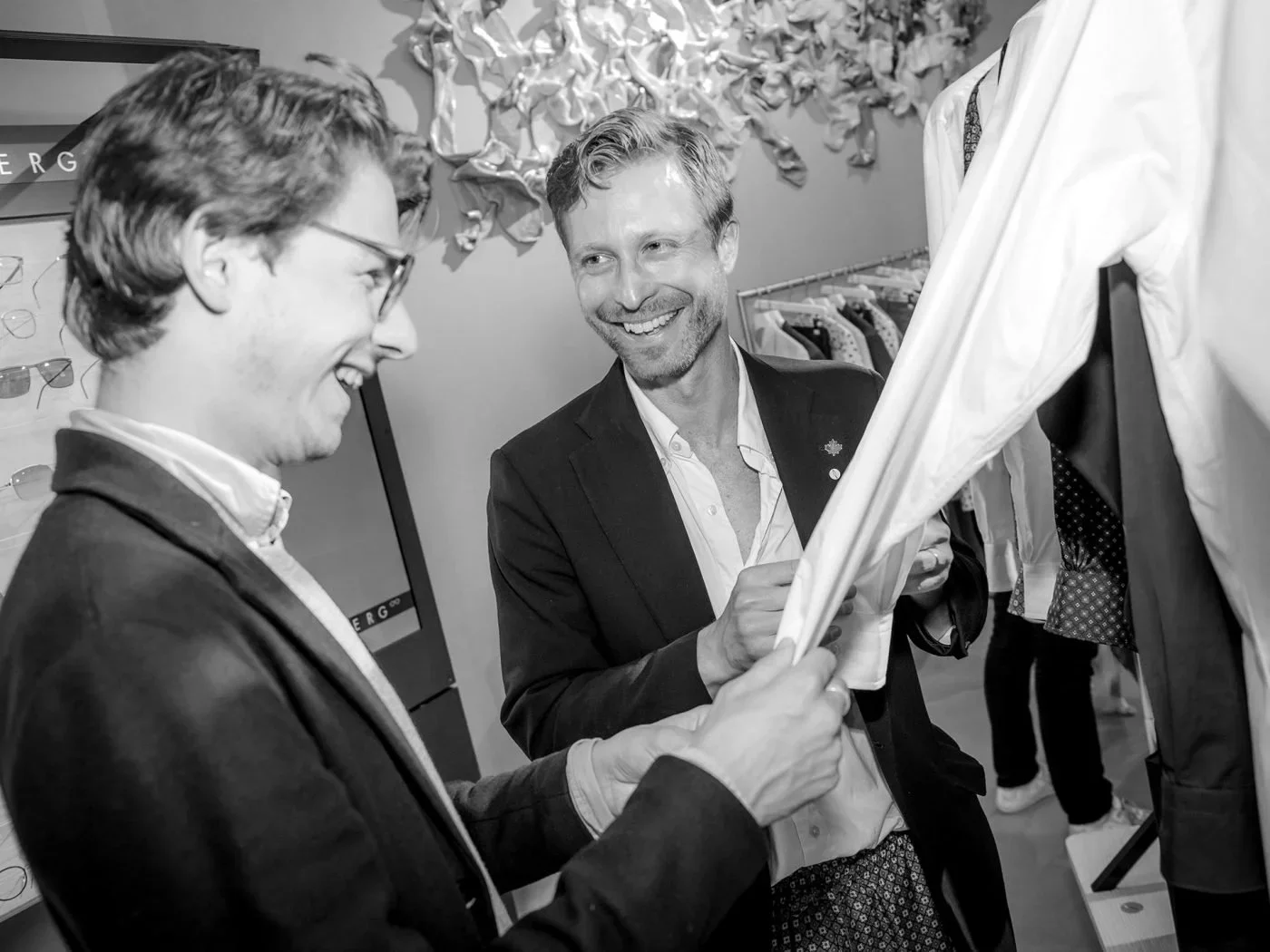

Words by the blue-eyed barbarian
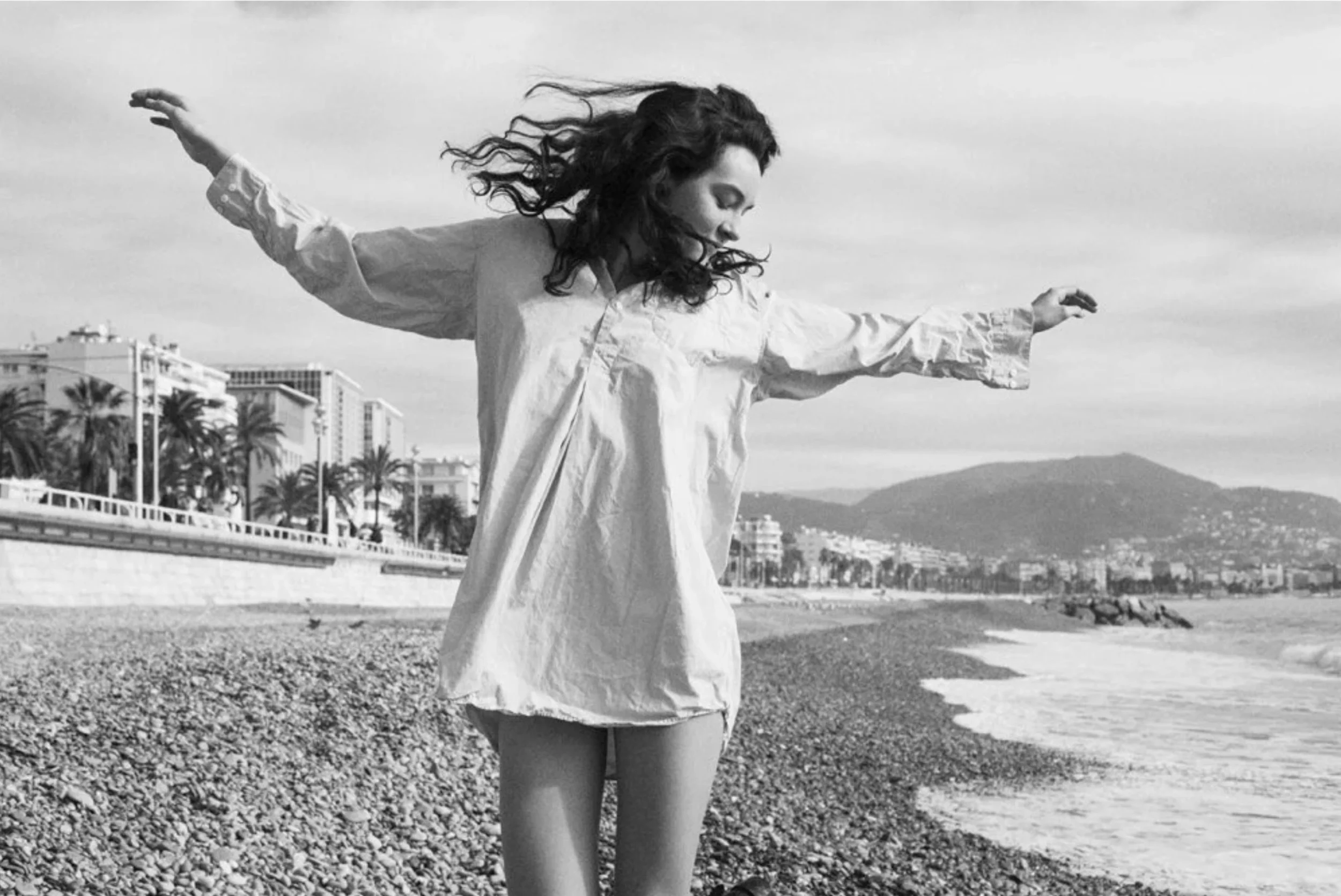
Appletrees is a young clothing brand from Stockholm that started by making shirts of an uncompromising quality. They have the cotton of the finest quality from Egypt, buttons from Australian shells and ethical hand manufacturing in Italy, but it's the attitude that puts the brand apart. Appletrees shirts have a very comfortable fit for each size, can be washed hundreds of times, and then be recycled in their own stores with 30 percent discount of new purchases.
We spoke with co-founder Victor Sandberg in Stockholm about his journey from the idea to realizing a strong brand.
What if we just start from the beginning, from the idea?
It started with the color actually. I found a piece of fabric which had contained very vivid and powerful strong colors. I felt in my body I have to do something with this, these colors.
Where was it?
In Amsterdam. I lived in Amsterdam at the moment. Charlie and I were talking for a while about starting a company and a brand together. So we traveled between Stockholm and Amsterdam on the weekends for a year.
I'm originally from Sweden, I grew up from the west coast in Gothenburg. But I lived here in Stockholm for six years before I moved abroad in 2006. I lived in Brussels and Amsterdam for seven years, I think.
What's your background?
The most recent thing I did before this, I was the senior merchandising manager for Levi's vintage clothing. And Charlie worked with the largest denim manufacturer in the world. He was doing sales and marketing here in Stockholm. So he was selling denim, the raw material, to Acne, H&M, all these big clients across Scandinavia. And before that, we also had been working in this industry. So we have a long background and close links from the ground up. We felt that it was a good idea to take our experiences, our friendship.
“First of all, we decided that friendship is the most important. And then we were talking for a long time on how to do it and when to do it and looking for the right timing. ”
– Victor Sandberg
So what was the idea back then?
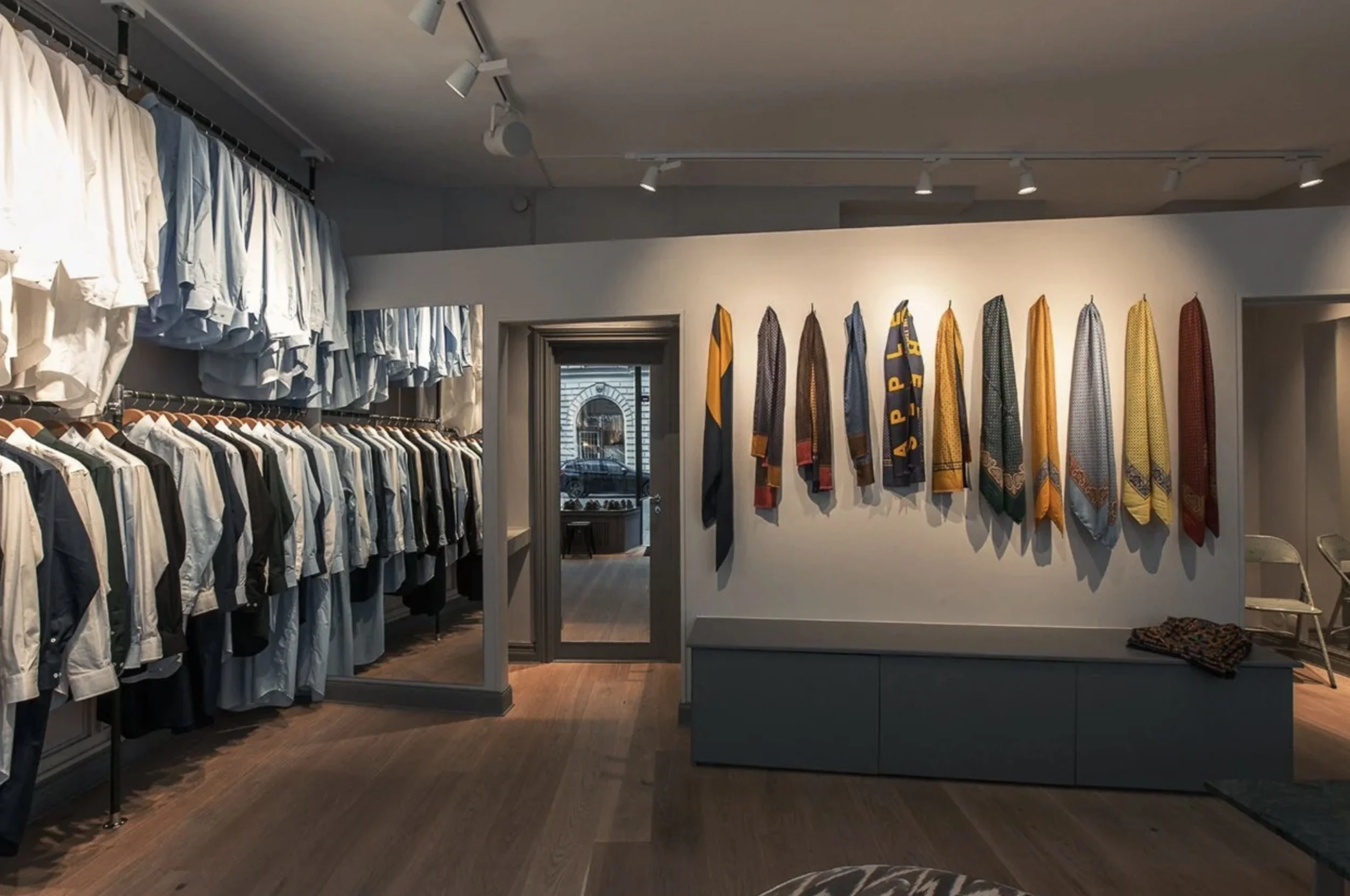
We started with the color palette and the result you see here in the shop. These are the colors that we decided to work with five years ago. Both of us thought that the clothing industry needs a period of some color. Very black clothes have been for a while and I think it affects people's mood and feeling open. I feel it's a bit hostile to wear all black or brown: black shoes, black socks, black jeans, black tee shirts, black beanie, everything black. It almost narrows the personality. It's my perspective of the world. It's even more strongly now. I have nothing against wearing black and we also had one black shirt in the line so we're not against black clothes. It's just it's so dominant and it's been so dominant for a while. We wanted to change that, to bring on coloring. It's a bit of humor, a bit of fun.
And then we decided that it needs to be quality fit and fabric.
“In the denim industry, there is a tradition of having a pair of jeans for 10 years and then repair them so you can have enough for another 10 years. And then some other person will pick them up after they’ve been worn for 20 years and wear them for another 10 years. That is the philosophy that we like. Then you’ve done a product that has a long life. And that’s the only way to be sustainable. ”
– Victor Sandberg
Are you thinking about making other garments, not only shirts?
Yes, exactly. We started with a very big vision, a lot of product ideas for the whole thing. But since we decided to be independent, self-invested, we started with only one white shirt. That's pretty much what we could afford.
In summer 2014 you went to Paris with one white shirt. Why did you make that decision?
We had spent over one year in product development and also together working on the philosophy of the brand, how we want to take it further. Every morning for over year we were walking around two hours in the forest here in Stockholm and around the lakes. You have to discuss what happens in various eventualities. So you're ready and prepared for the challenges ahead, so you have the same point of view on things. Because what matters is how you handle the challenges on the way.
At that point, we had washed, worn, and tested different silhouettes of every single shirt. In all sizes, from double extra-small to double extra-large on both men and women to make sure the grading is correct. It's something people forget. A lot of clothing designers make clothes that look nice on a picture, but not to wear in your daily life. There's no room for movement, for instance. A lot of products are minimal in the wrong way. It's not generous in fabric.
Therefore we wanted to consider all sizes, all body shapes, and all genders. We fitted on men and women the same product in every single size in every body type throughout.
“We washed the garments up to 500 times to make sure that the button stayed, and the fabric improved with age. It ages with dignity, so it’s something that looks like something that you take from the vintage world.”
– Victor Sandberg
You went to Paris and were on the same stage with Italian brands who likewise take their pride in the quality of suit and shirt making. How did you stand out?
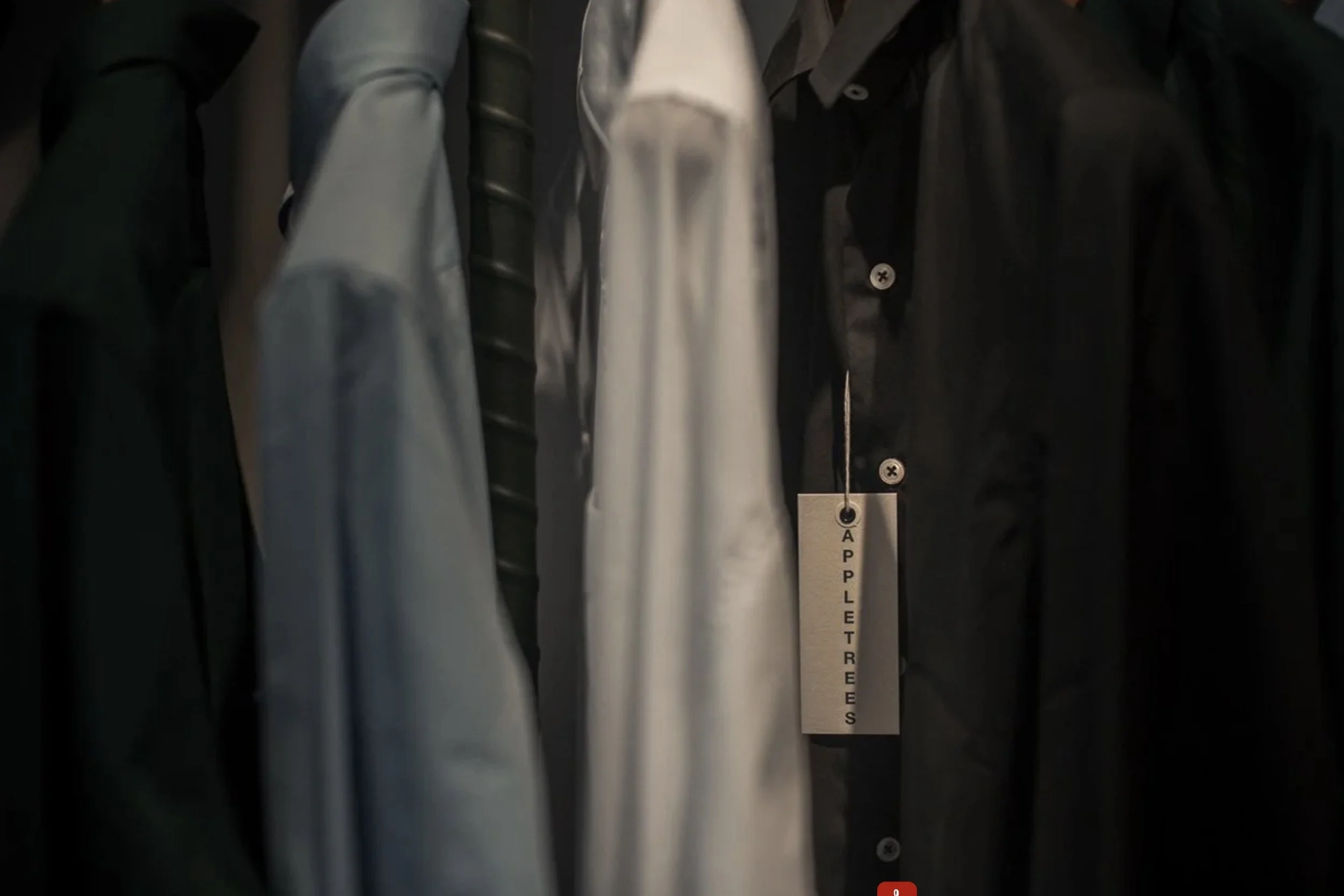
I think it was a real paradox for them to see us. Because I did bring, apart from the white shirt, really heavily washed out garments. Which made it very easy for industry people to understand that that's quality if it looks very nice after years or where do you see.
Plus, there was another aspect. Very often when you talk about luxury, it's something that is a facade. It's something that people want to share visually. Luxury is abused as a word.
To me, it’s more of a human rights issue, to be honest. The way people look at it today, luxury is a price point. But why is it the high price point? And very few people ask that question. However cotton originally was grown consciously in a non-toxic environment, the people who harvest the natural fibers had a right to have holidays, to get paid on time. They have showers at work, they live a normal life. They can support their families. They don't break their backs. They can go to a restaurant in the evening. So it's a good job for them. And all those aspects affect the price point because it costs more and it takes longer to make.
“And just to establish and make sure that every person involved in the whole process live a life that’s worthy of a human being, then the price is high and then people have put their name on a high price point called luxury.”
– Victor Sandberg
Were you communicating that idea on the fair?
If someone asked a question and don't really understand why it costs so much money and really wants to know. We know the people who make our products by name. Not every single person, but I know they have holidays. It's so clean and tidy in this environment where they make everything. Everything is run really well and people are happy and it's a nice atmosphere there.
Where is it made specifically?
Specifically in the northern part of Italy. In different places. We fly into Milan and then from there within three, four-hour drive up and down, and around we have all our manufacturing based. We weren't aiming to make a very expensive product. We were mainly aiming to make a very good quality product that would last for 10 years or a hundred years. It ended up being in the luxury price segment. So that was the paradox that people I think were attracted to that we were beating them up, using the product.
What happened after that fair in Paris?
The first order I wrote within one and a half hours. Then two weeks after a distributor from Japan flew in. They were so excited about this white shirt. They saw the potential in it. And we shared more. We shared our business model, how we were planning to grow the business, how we were doing it, the whole strategy basically. And then we signed a contract with them to be our distributor for Japan and it's going strong since then. We're expanding there every season.
And we're also expanding in Germany, in France, in England. We've been selling from home, we've been selling online and we are investing heavily back into the company to make sure we can grow.
Were you selling only white shirts?
Yes, and we also added office blue, a pale blue sky color.
What was the price back then?
On the shirt, we call All Over The World, its retail price is 425 euros. And the basic dress shirt is 325 Euros. So it is a high price point. It is. But if you consider that you can wear a shirt for 10 years, that it will last, that you can wash and wear it, instead of buying 20 shirts over that lifetime. You actually have less impact on the wallet but also on the environment because when you use less resources of the environment.
You had a strategy for the business. What did you have to change in real life?
But we haven't changed anything on a strategy. We do exactly what we say. We haven't changed one centimeter in the style, anything with the fit or the details. It's exactly the same since we launched. We haven't changed. It has no seasons. It's never been on sale. We stick with the same idea. We haven't changed anything at all. It's unisex. It fits everyone. It's never in season.
And number one is quality. We promised ourselves to take no shortcuts when it comes to quality in terms of fit, fabric, the process of manufacturing, and the life cycle of the garment.
Number two is function. The product needs to have a function. It needs to work with you. It needs to be there for you, so you don't feel owned by the garments. It's like a shield, instead, you work with them. Because if you weigh 122 kilos and you are 190 tall, very few shirts would allow you to tie your shoes without showing too much skin. So that's something you have to consider when you actually design your collection. It should fit properly on all sizes and shapes. You need to be serious about how it will feel for that person.
If you're 122 kilos, with the 190 centimeters today, the clothing industry has not really considered you. We're changing that and it's actually working really well for us right now.
Number three is color. Color. So we want the color palette. We always come back to the same color fits.
Those are the filters that we broadcast.
“When it comes to the strategy, there are three simple things. We created a formula that we call it ourselves.”
– Victor Sandberg
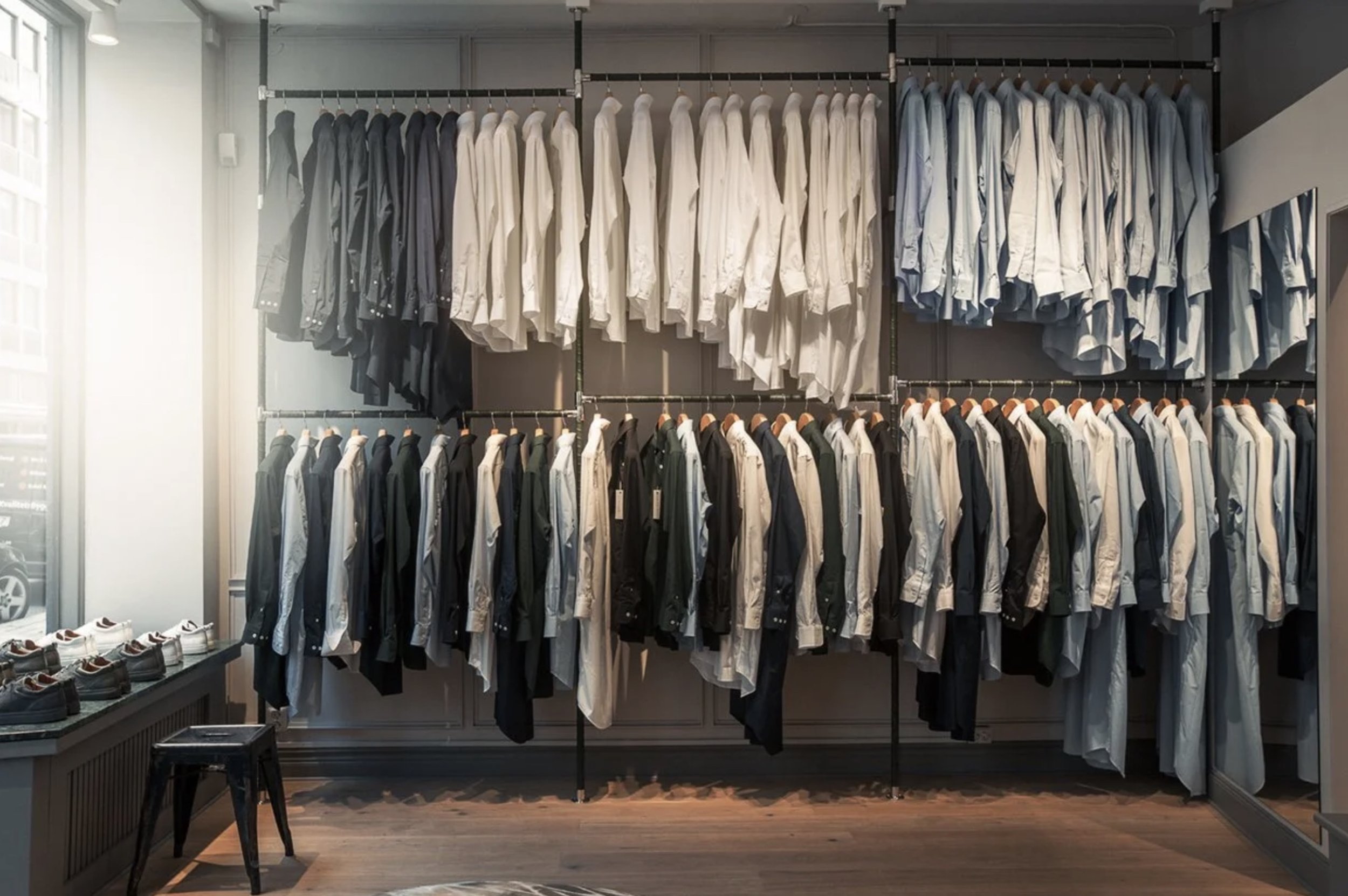
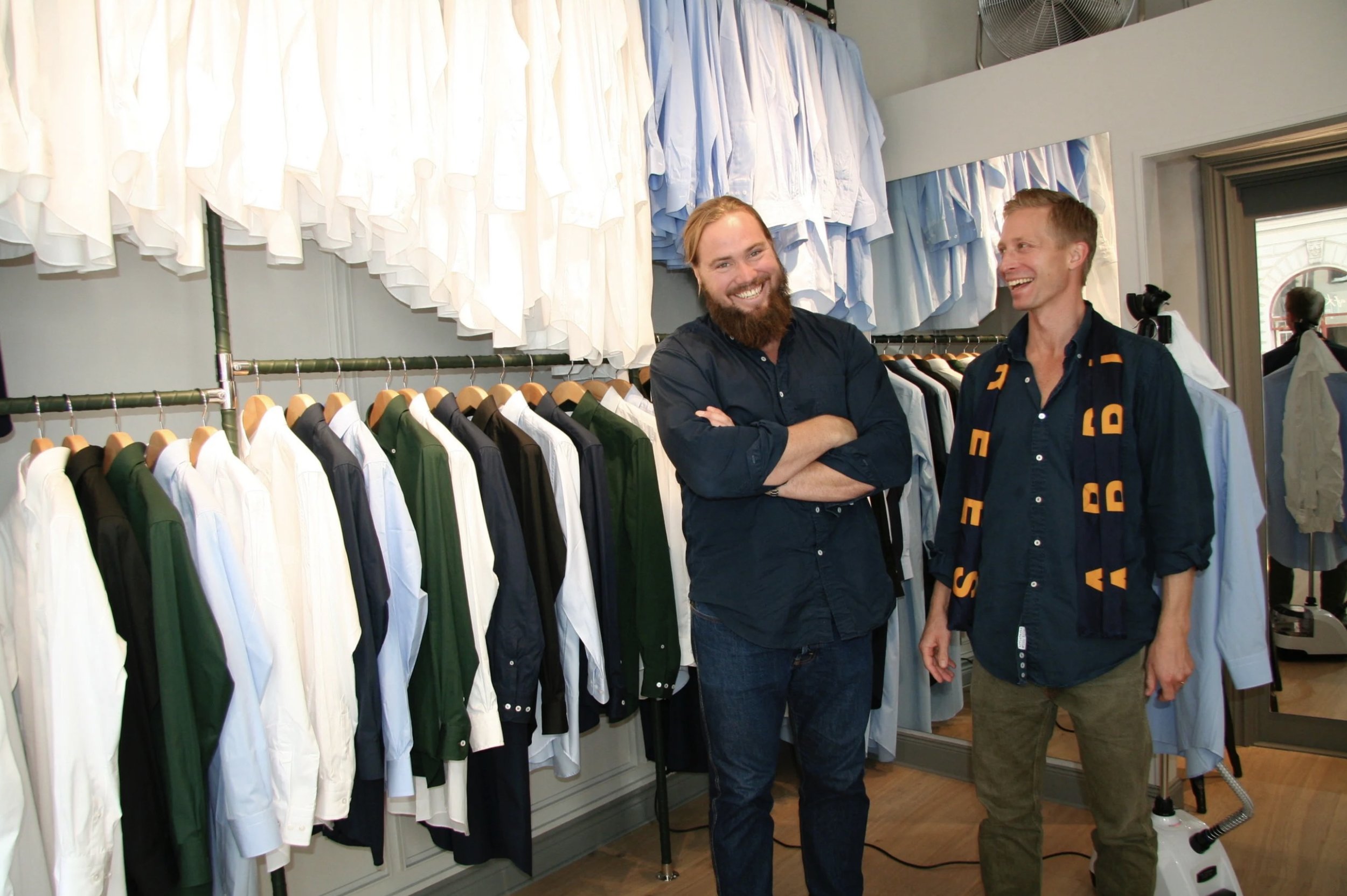
We have been talking about the product side. There are also business factors that lead to the overall success or failure of a company. Aside from the product quality. How did you plan the success of this business?
Well, business-wise it's a result of relentless energy.
Why we need a principle or a formula: “one, two, three”, is that it's easy to get lost in this world. Because you meet buyers from big chain stores or webshops, and their standard thing is: “Yeah, we like what you do, but can you give us a black tee-shirt at 30 euros retail. Would buy and sell that because that's what we can sell.” When you hear that so many times in so many meetings, you have to be determined that that's not what you want to do with your brand, with your business. So you have to swallow that, you have to accept that that's what they want, not what you want and not what fits your brand. So you need the stamina to be able to fall back to your core principles.
It's easy to feel lost when you need to pay your bills, not only for the company, also in your personal life. It's easy to go and take the easy route, which is the low price point. That's another route. Yet you need to make sure that you don't sway away from where you going, and you need then to have a long term vision. It's tough, but you have to be convinced you’re doing the right thing.
Why we need a principle or a formula: “one, two, three”, is that it's easy to get lost in this world. Because you meet buyers from big chain stores or webshops, and their standard thing is: “Yeah, we like what you do, but can you give us a black tee-shirt at 30 euros retail. Would buy and sell that because that's what we can sell.” When you hear that so many times in so many meetings, you have to be determined that that's not what you want to do with your brand, with your business. So you have to swallow that, you have to accept that that's what they want, not what you want and not what fits your brand. So you need the stamina to be able to fall back to your core principles.
It's easy to feel lost when you need to pay your bills, not only for the company, also in your personal life. It's easy to go and take the easy route, which is the low price point. That's another route. Yet you need to make sure that you don't sway away from where you going, and you need then to have a long term vision. It's tough, but you have to be convinced you’re doing the right thing.
You have to be really convinced. I mean how tough it’s been in the first year. If I made a thousand phone calls, I would get ten answers. Year two, maybe if I did a hundred phone calls, I would get twenty answers. And, now if I make ten phone calls, I’ll get nine answers.
“Never give up, keep making the phone calls, keep telling the story, keep on educating people on what you’re doing. Just don’t give up. That’s it.”
– Victor Sandberg
Whom did you have to call specifically in the first years?
Buyers, press, journalists. I mean, people who potentially can buy your product. That's the business side of it for me.
How did you create a list of the right phone numbers?
We made a target list of the stores we wanted to work with in the world. And from there you start. And then once you enter one of them and two of them and then the next will follow you. I call them and then fly there to say hello. It's the old school way of doing it. It starts with a personal meeting. That's it.
How do you get into the right stores when nobody knows about you, yet?
You have a good product or you are in the right place at the right time.
How did you get into the first stores?
The trade shows. We haven't done many, but the trade shows have been the best in terms of reaching out to them. Most buyers will visit Paris at least once for a year or two times per year. And if you stand out at a trade show…
I think we stood out because I put everything at risk, my whole life on the line and I went to Paris with one white shirt to show that.
You need to be quite confident. Maybe that's what makes it interesting. If you tell to an investor who's going to put 10 million dollars into your company, that you're gonna make one white shirt and go where thousands of brands are showing at least one hundred of new ideas every season, and you turn up with one white shirt...
That's like launching a new version of a bicycle.
You know? I mean, the idea in itself and a white shirt is probably the oldest in the world. We're pretty primal in that way as well. The primal way of the weaving process. Cultivating the cotton, spinning and making it into a fabric and making it into a garment, that is quite amazing.
“Well, you need to have a vision then. I’ve heard that Ralph Lauren went out with one necktie. That’s how he started. If he could do that, then why couldn’t we start with a white shirt? I mean, he’s fantastic, but so are we.”
– Victor Sandberg
Did any of the press publications help you in a significant way?
Probably, a few of the most important magazines, especially in Sweden, made big features on our product and us. That had put us on the map. Café magazine, which is men's magazine that's been around for many years, did a big thing on us. We were in a good spot in the magazine with a picture of this very long white shirt that was brand new for the market. It was a bit shocking for a conservative market like Sweden, Stockholm, where the dress code is a formula. If you go down to the city center here, and go into the bars, 99% of all the guys will look pretty much the same. Not in their faces, but with their clothes. There's no individuality at all.
It's important to stand out when you're new, but not for the sake of it. We wanted to do that product because we wanted to wear it. And it had a big impact because, after that article, a lot of people had the guts to actually wear a different silhouette.
What else did help in the beginning?
Pop-up shops. We were working from home for almost three years. It's hard to reach out then in a bigger way. So Christopher from Our Legacy, actually a friend from the childhood, sad he had an empty space in one of their first shops, which they used to share with Tribune boys. He said: "It's empty for two weeks. Go in there, work from there."
We put maybe a hundred of white shirts in a hundred square meter of whitespace in order of sizes. And then we made the phone calls. We call everyone by person, actually. I think we called every person we have ever met and said: “You should come and look at this. This is fun.” In those two weeks, we sold incredible amounts of high-end white shirts. So that gave us confidence.
Consequently, we did another pop-up. And then we got a big order from a big retail chain, which gave us even more confidence, but also a little bit of money in the account. Following that we had the courage to go in and open our own retail environment, our own store.
Why Appletrees?
Cause you need a name. It's one of the answers. It's a good name. It's another answer. I think it's easy to remember. It's happy, positive.
Location: