Centre on Armed Groups
Creative direction, information architecture, and a website for a conflict research centre.
the blue-eyed barbarian:
Denys Putilin, Olena Kvitkovska
Sector:
Think Tank
Website:
armedgroupscentre.org
What we did:
Creative Direction
Website Design & Development
Year:
2025
Fonts:
Antique Legacy by Optimo Type Foundry
Untitled Serif by Klim Type Foundry

Client and the challenge
The Centre on Armed Groups works to reduce violence and end armed conflict through a network of over 100 specialists across the globe, providing research, dialogue, and advice. When journalists at The Economist or The New York Times need to understand what's happening in Myanmar or Sudan, they call on the Centre's experts.
The Centre started in 2020 inside ODI, a London-based think tank, and became independent in Geneva in 2022. The expert network is the organisation's reason to exist, it came first, and the research output followed. After a few years of building the body of work, they had grown out of their DIY website. Now we could design a system for what they had produced and build a foundation on which it would grow.
How the project grew
The Centre came to us for a website, but in early conversations, it became clear the project needed to start further back. We could help with how the Centre presents itself visually, and how its growing body of research should be organised and discovered. The scope expanded to include creative direction and information architecture.
Creative direction
I follow military and conflict research closely. I'm from Ukraine, and just before the Russian invasion I was reading technical argumentation from researchers trying to assess whether it would happen. That's how I discovered the underlying world of conflict research, and platforms like War on the Rocks, which hosts some of the best specialist writing in this field.
So when the Centre came to us, I already understood where they sat. They occupy a position between the specialised platforms where insiders talk without mediation, and mainstream media where information has to be made broadly accessible. We wanted the site to read like an editorial publication, something closer to a foreign affairs journal than a university department page.
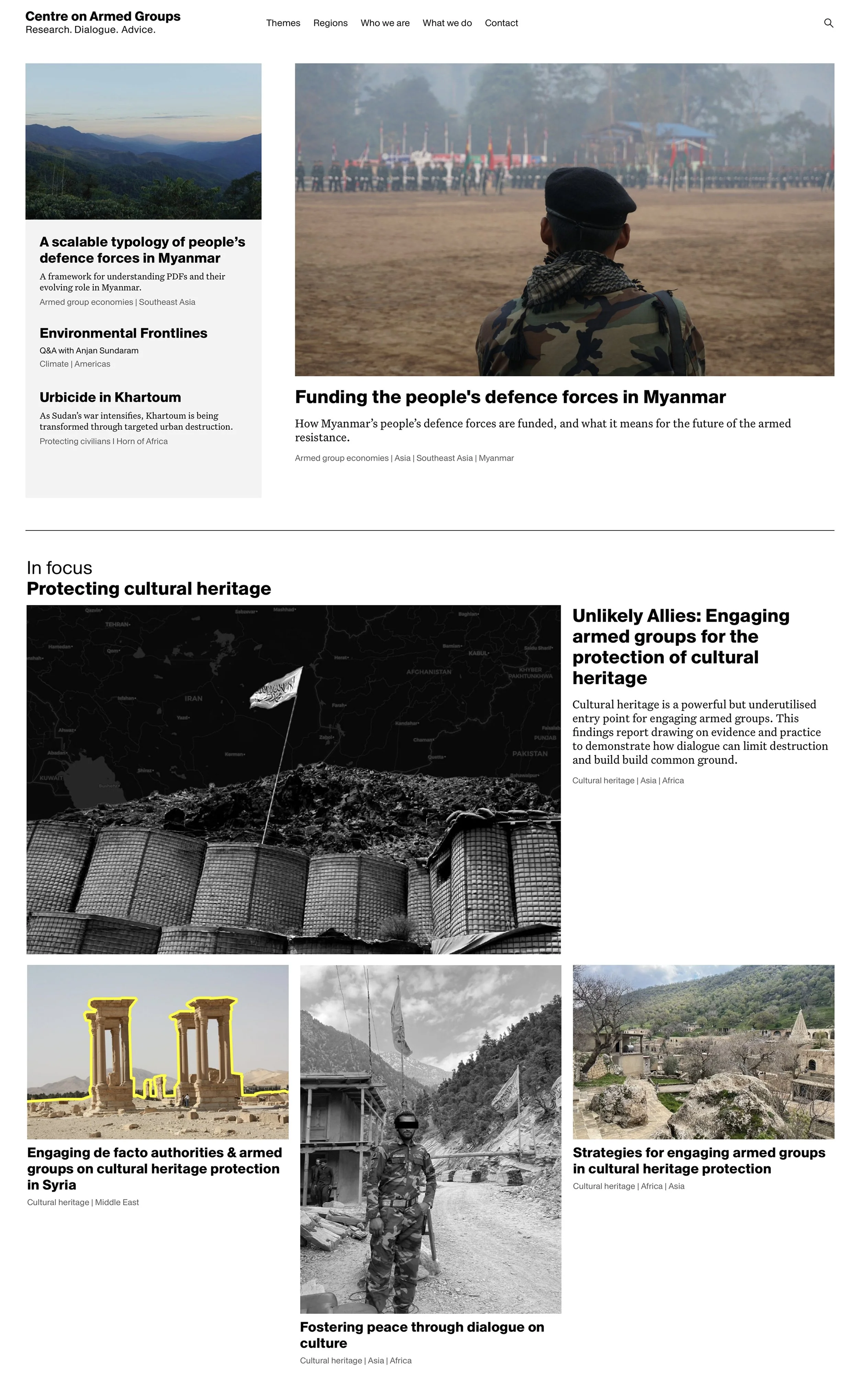
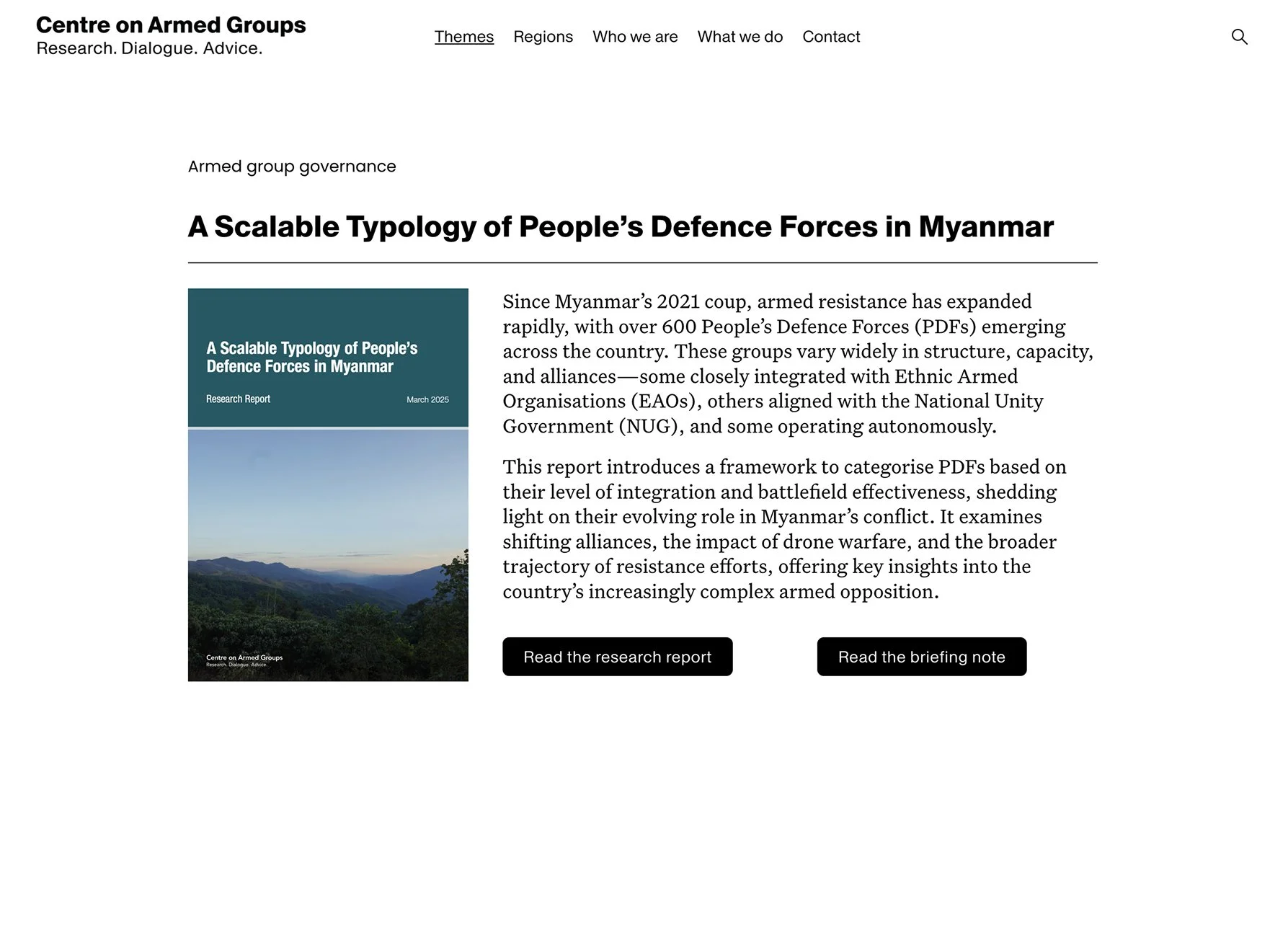
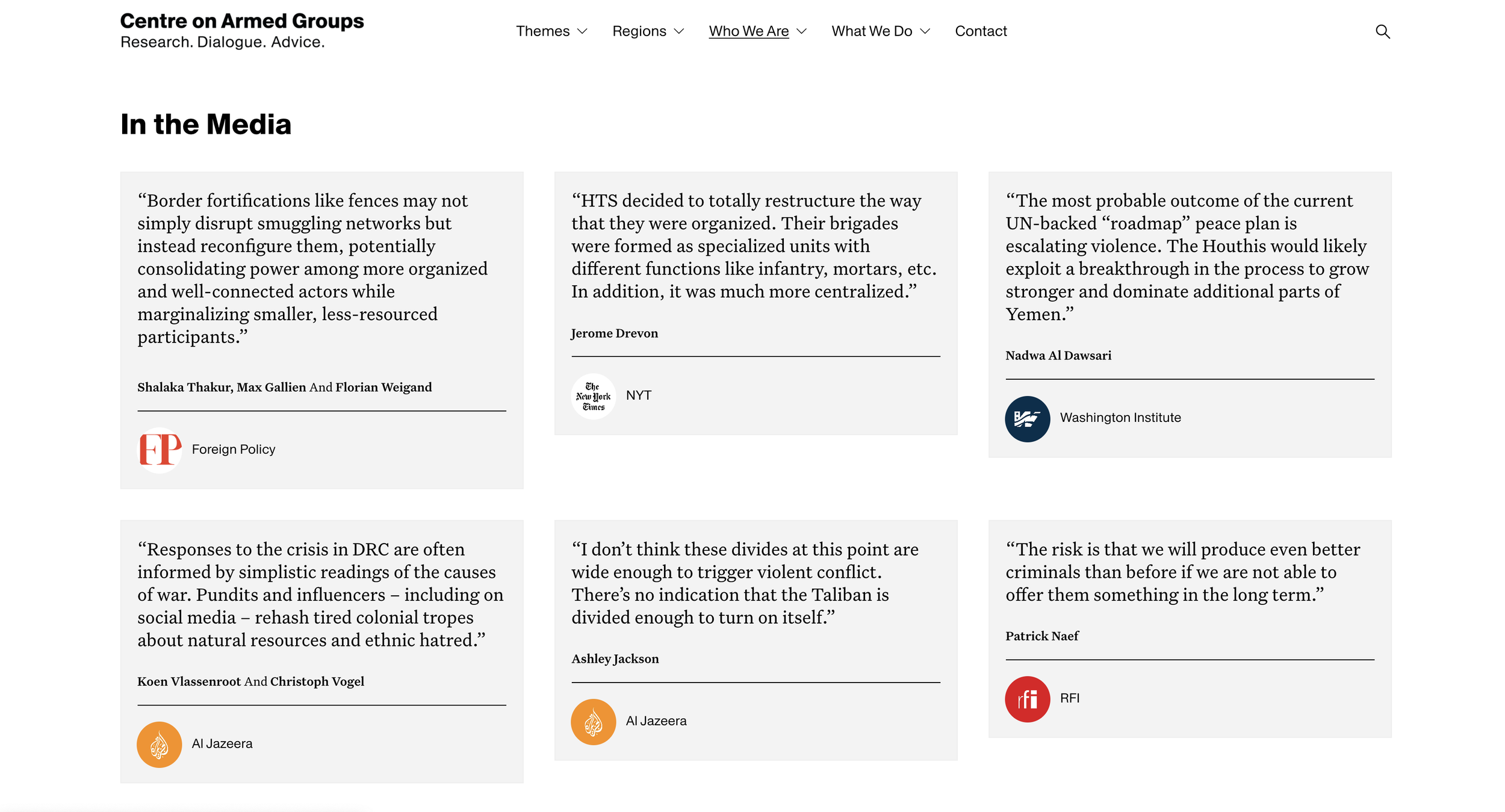
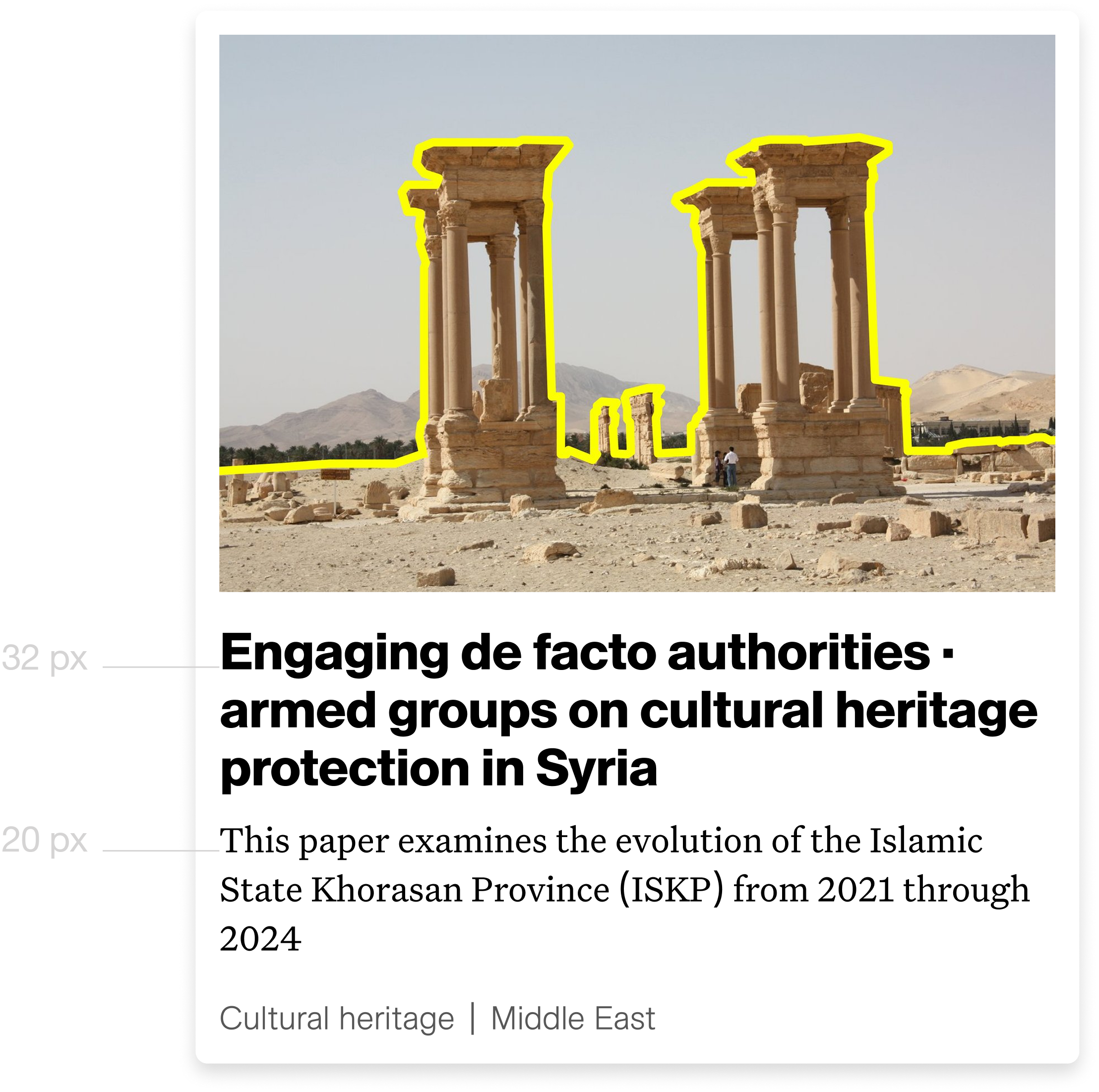
This set the art direction. For photography, we established principles for selecting and treating images: documentary in tone, restrained in colour, as well as the collage styles. For typography, we developed the composition of Antique Legacy and Untitled Serif as a paired system before applying it to any layouts. Antique Legacy, a Swiss sans serif from Optimo Type Foundry in heavier-weight sets the headlines. It creates a sense of urgency, gives a bit more character without drawing attention to itself, and it pulls away from a purely academic register toward something more editorial.
Untitled Serif by Klim Type Foundry handles the body text. It evolved from the typeface used in the Financial Times, and it reads beautifully at length, which was critical for a site where visitors work through dense summaries of research reports.
Information architecture
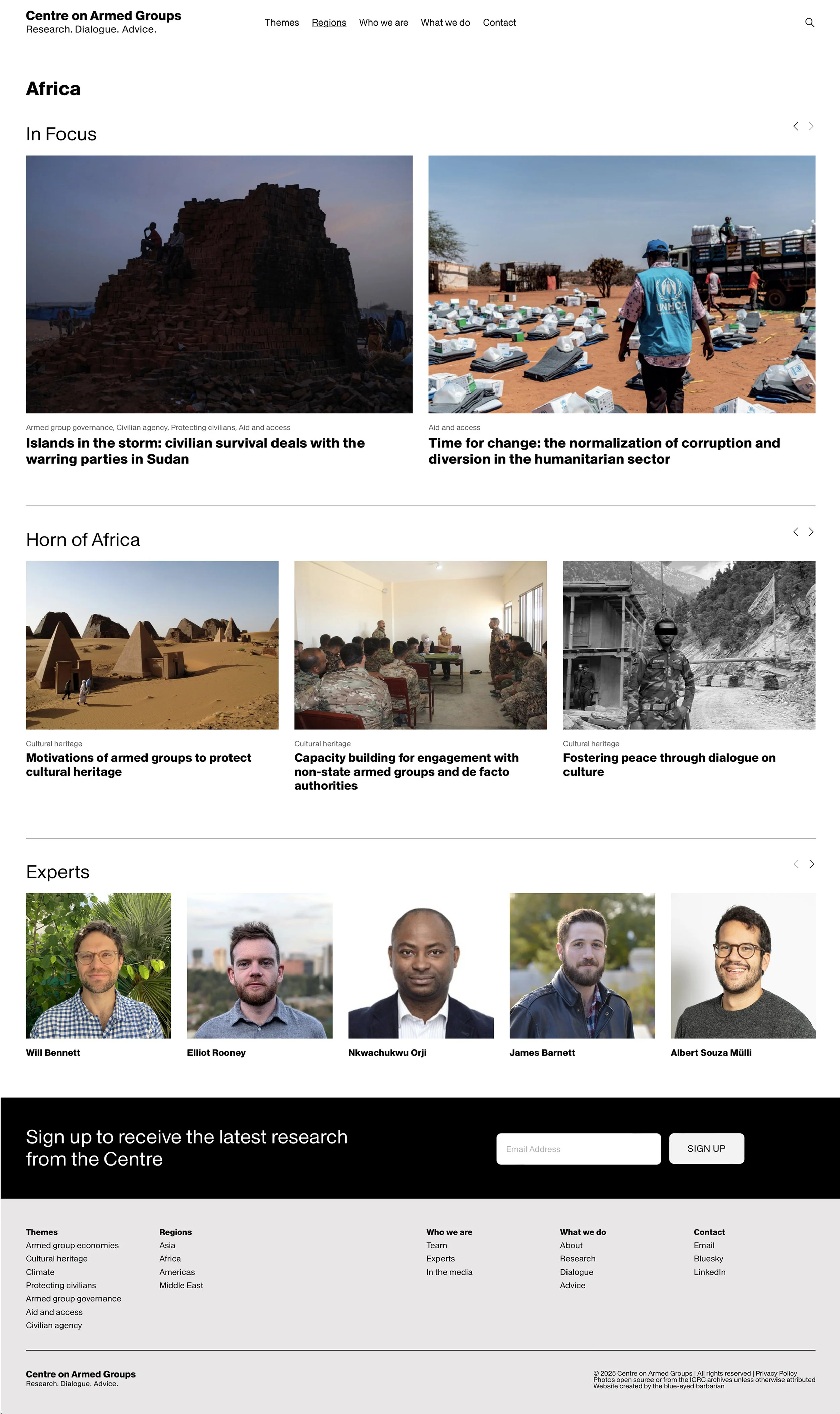
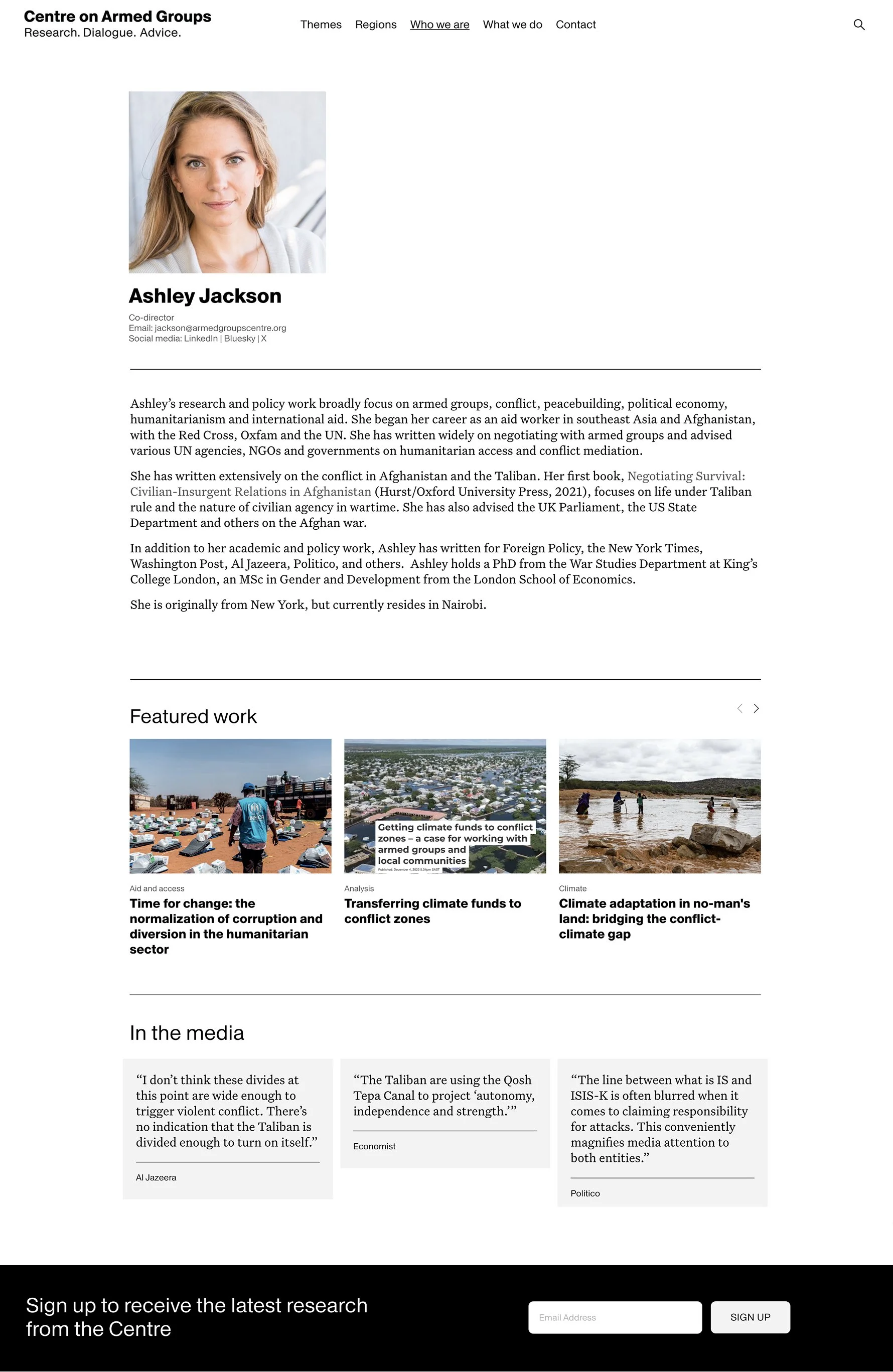
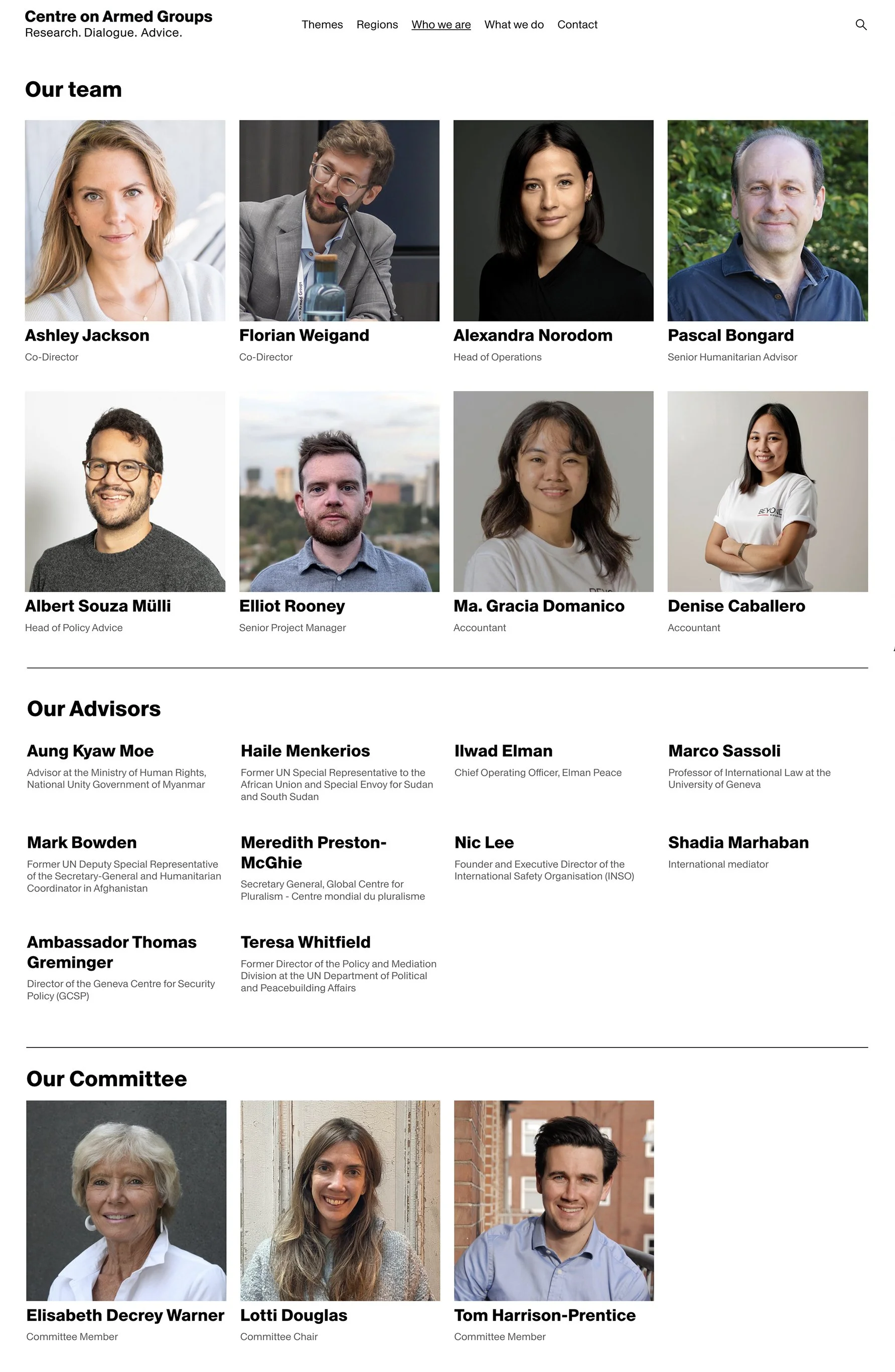
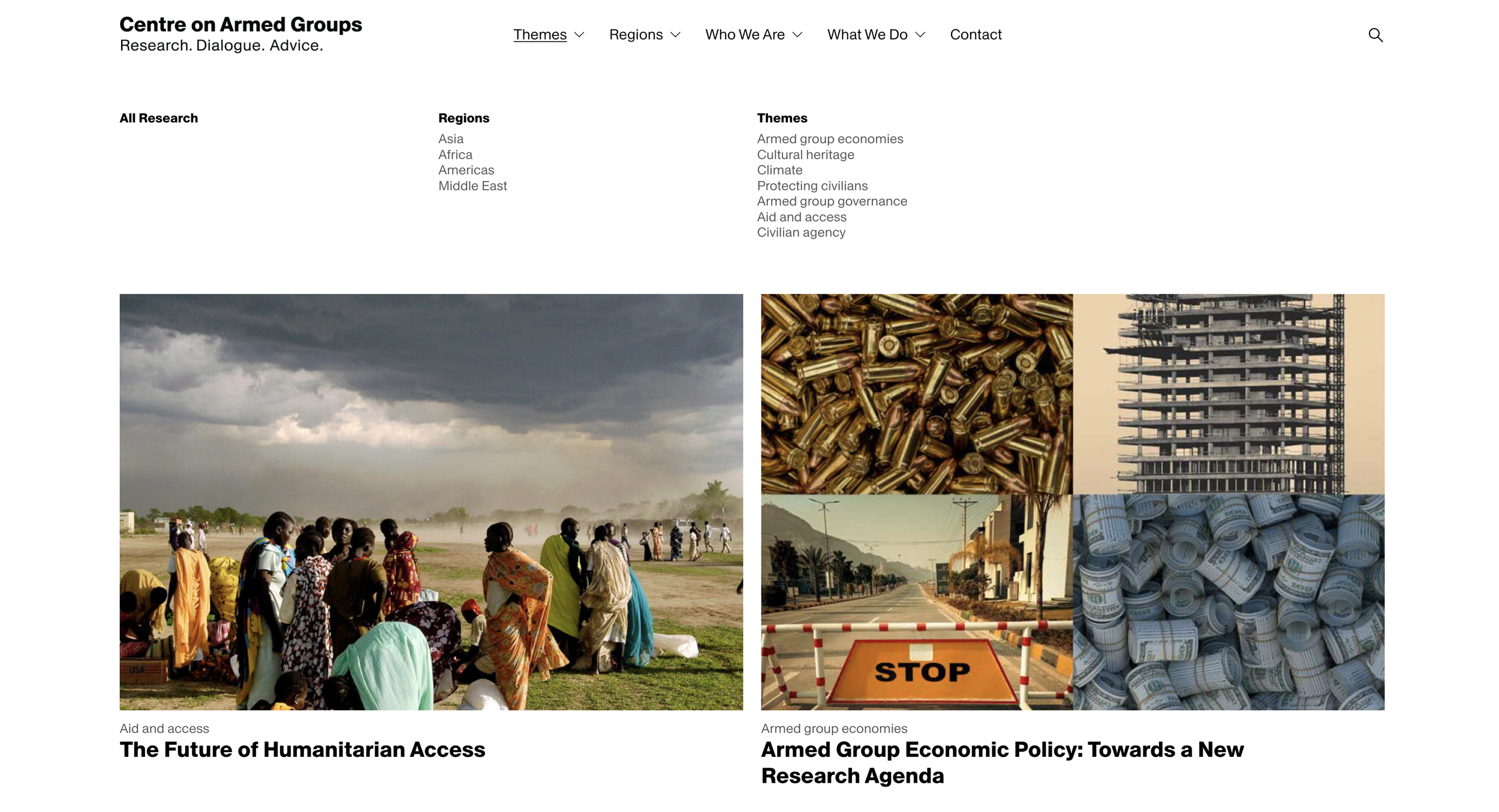
The brief didn't specify how the content should be organised. It was just a body of research, growing, with no taxonomy. I looked at how think tank websites work and proposed a tagging system along two axes: thematic directions and geographic regions, with every report also tagged by the experts who produced it. This gives three pathways into the content.
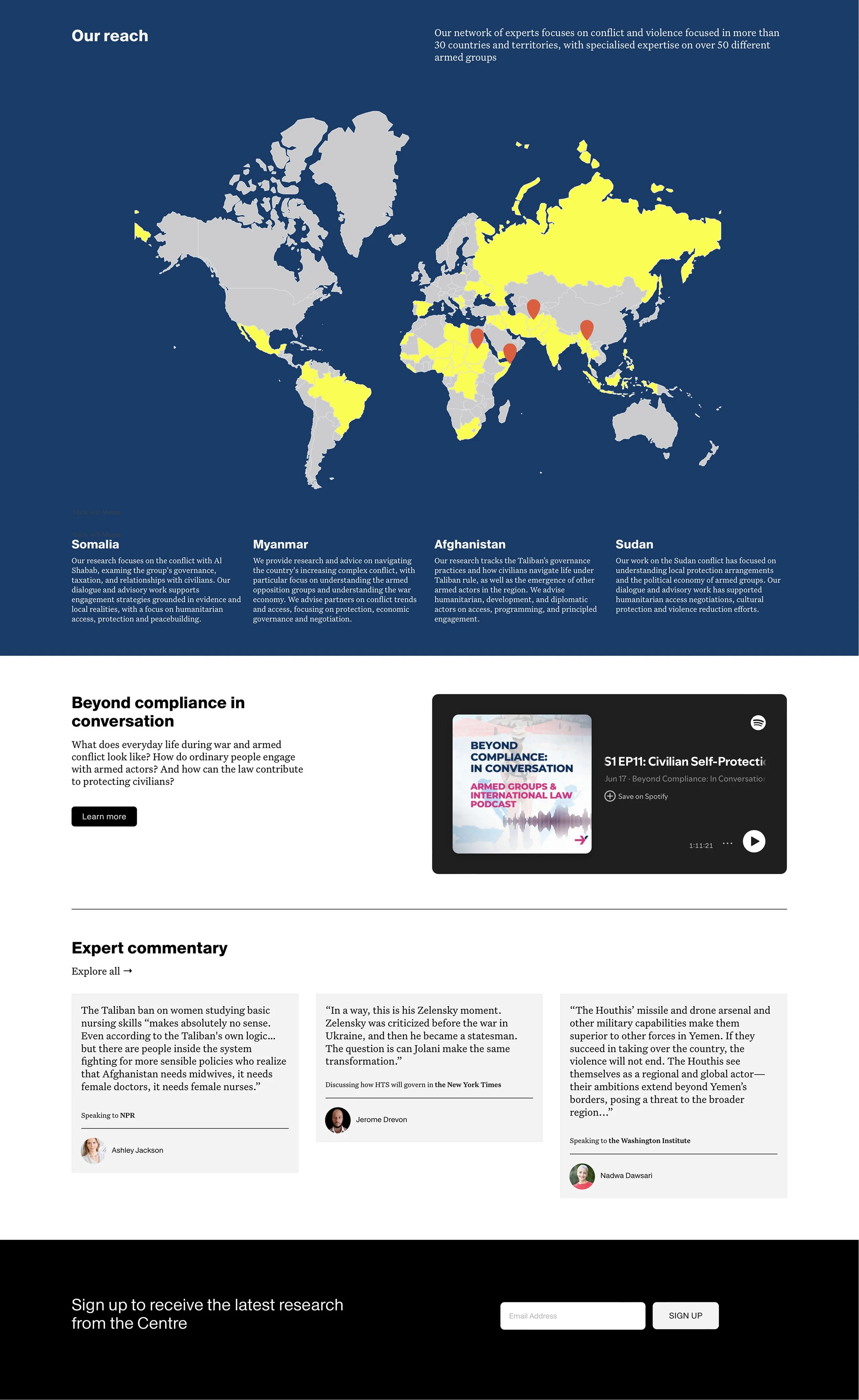
The homepage became a sequenced narrative: featured research, an interactive map showing where the Centre operates, expert commentary. Together the sections communicate what the Centre is. The homepage is updated monthly to reflect new reports and shifting priorities.
Squarespace build
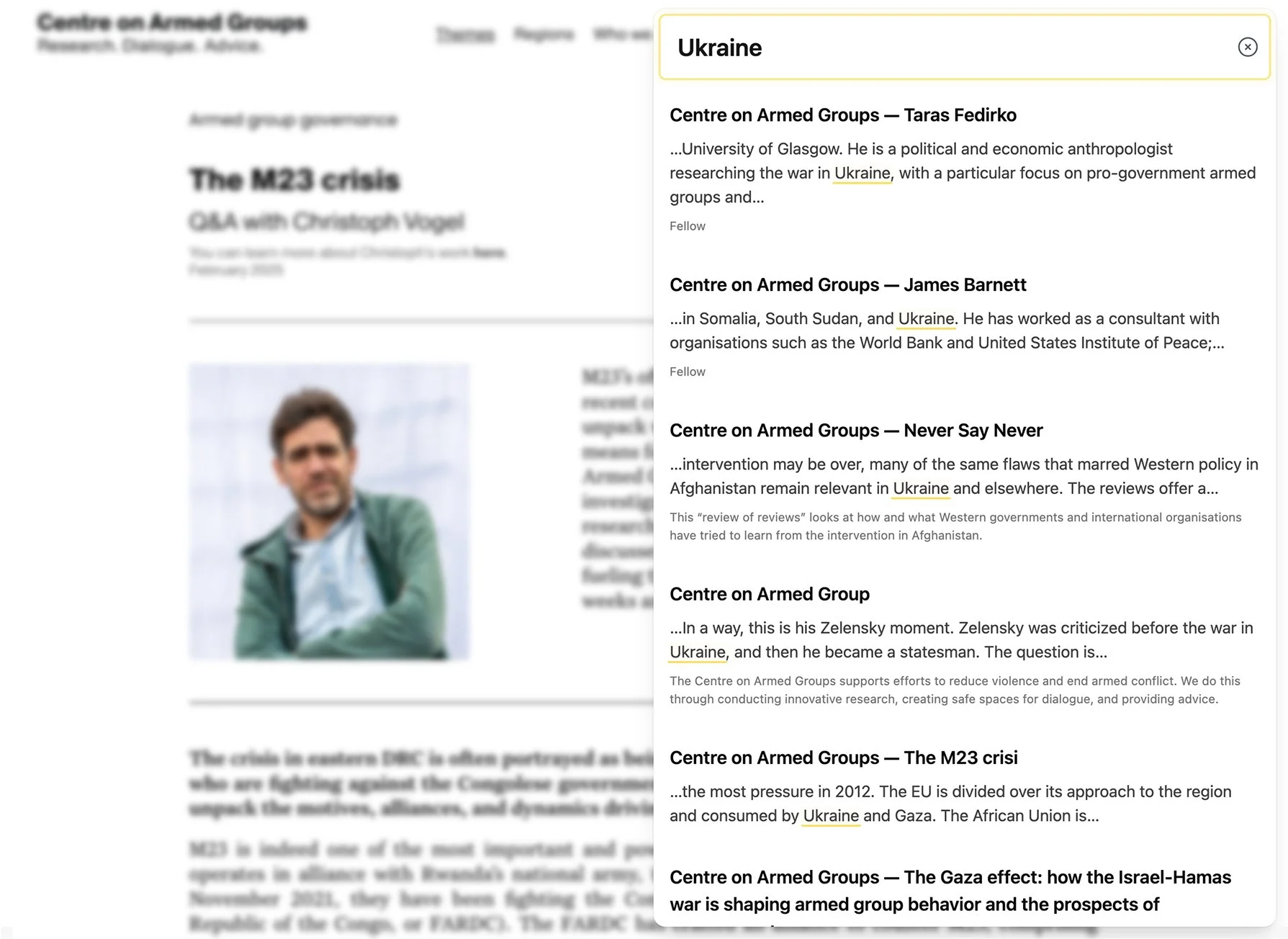
Custom code addressed the search functionality, filtering across the taxonomy, and the integration of an interactive map showing the Centre's coverage across 30 countries. The rest runs on native Squarespace features. The site is modular and scalable. The Centre publishes new research, updates featured reports, and adds expert profiles without developer support.
Results
The Centre now has a visual language and the architecture to reach a wider audience. The expert network runs through every page, and the taxonomy makes years of research discoverable. Brand guidelines and creative direction give the team the tools to maintain all of it independently as the Centre grows.
“Working with Denys was an excellent experience. He and his team translated our vision for the Centre on Armed Groups into a clear, engaging, and professional site that uniquely reflects our work and identity. His design sense, responsiveness, and attention to detail made the whole process easy and quick. We’re thrilled with the result, and it has allowed us to establish our visual language and reach a wider audience.“
— Ashley Jackson, Co-Director, Centre on Armed Groups