Art Crime by Laura Evans
Turning a book about art crime into a website that commits one.
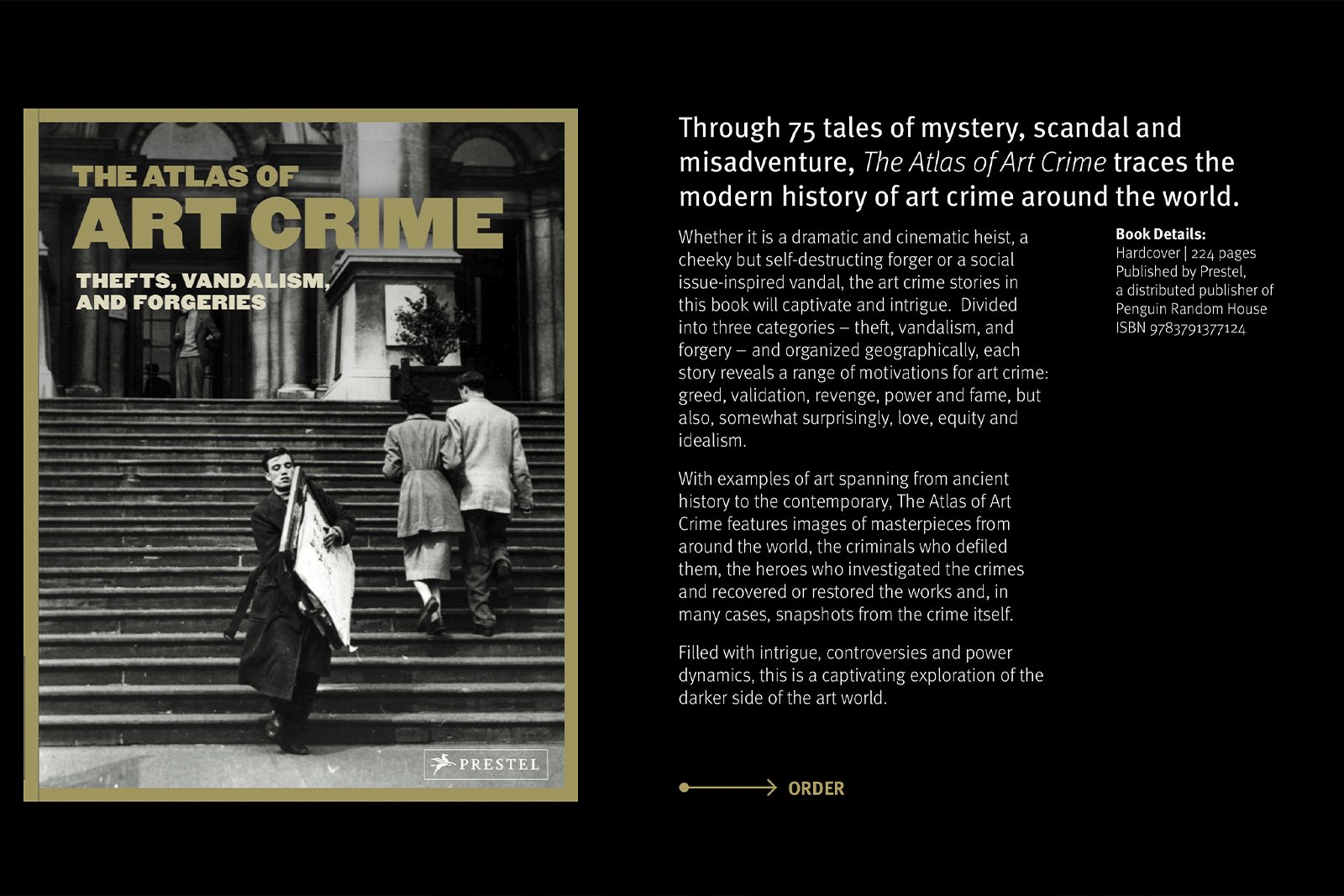
Dr. Laura Evans is a Distinguished Teaching Professor at the University of North Texas who has lectured on art crime across six continents. Her first mainstream book, The Atlas of Art Crime, published by Prestel and distributed by Penguin Random House, traces 75 stories of theft, vandalism, and forgery across the modern history of art.
Laura had no website. The book's publication created an immediate need: a digital presence that could support the launch and attract speaking engagements. The site needed to serve two audiences at once. Readers arriving through the book. Institutions evaluating her as a speaker.
the blue-eyed barbarian:
Denys Putilin, Olena Kvitkovska
Sector:
Art Historian
Website:
lauraevansartcrime.com
What we did:
Creative Direction
Website Design & Development
Year:
2025
Fonts:
FF You Can Read Me by Phil Baines
Monterio by Creative Corner Studio
FF Meta Pro by Erik Spiekermann
Approach:
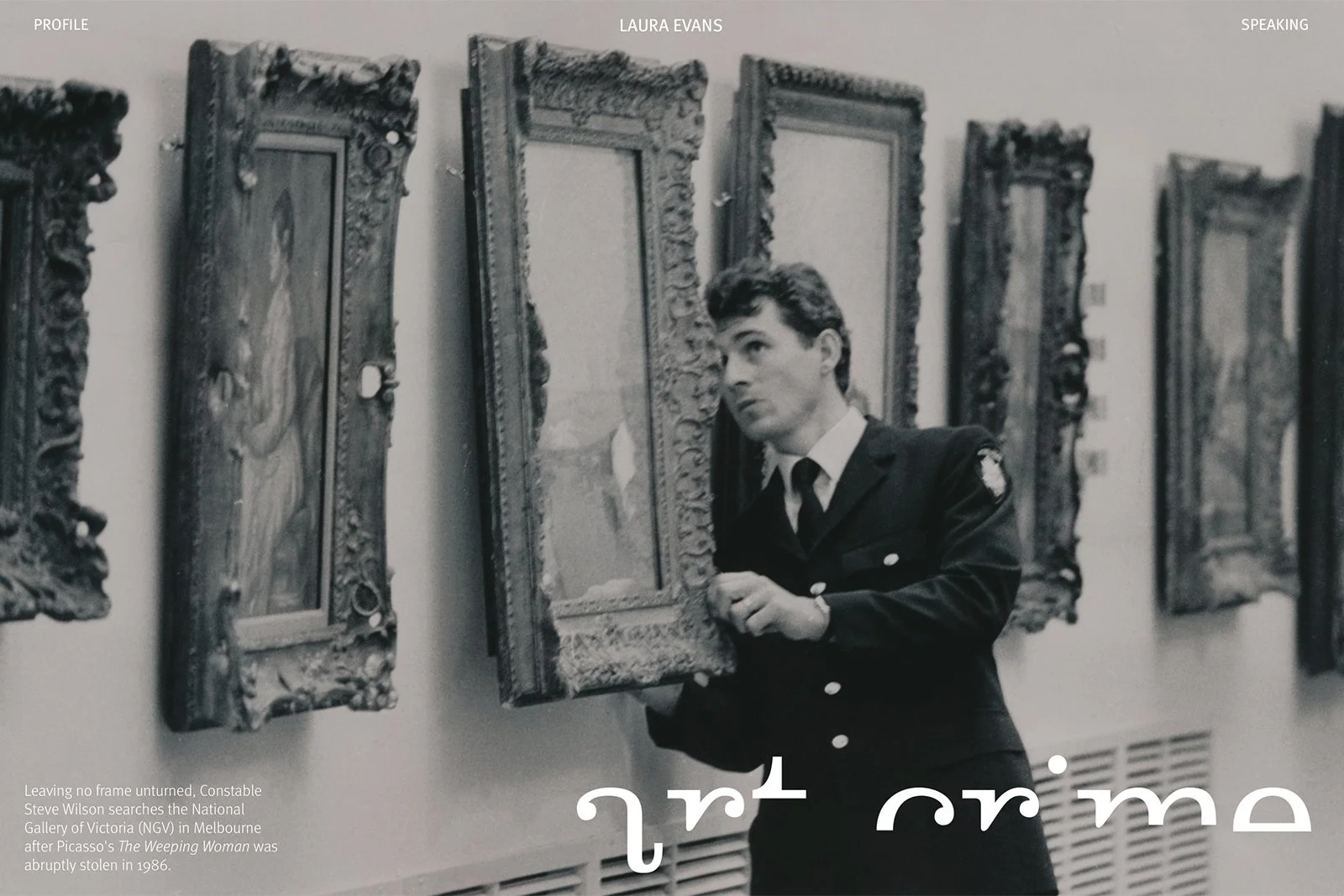
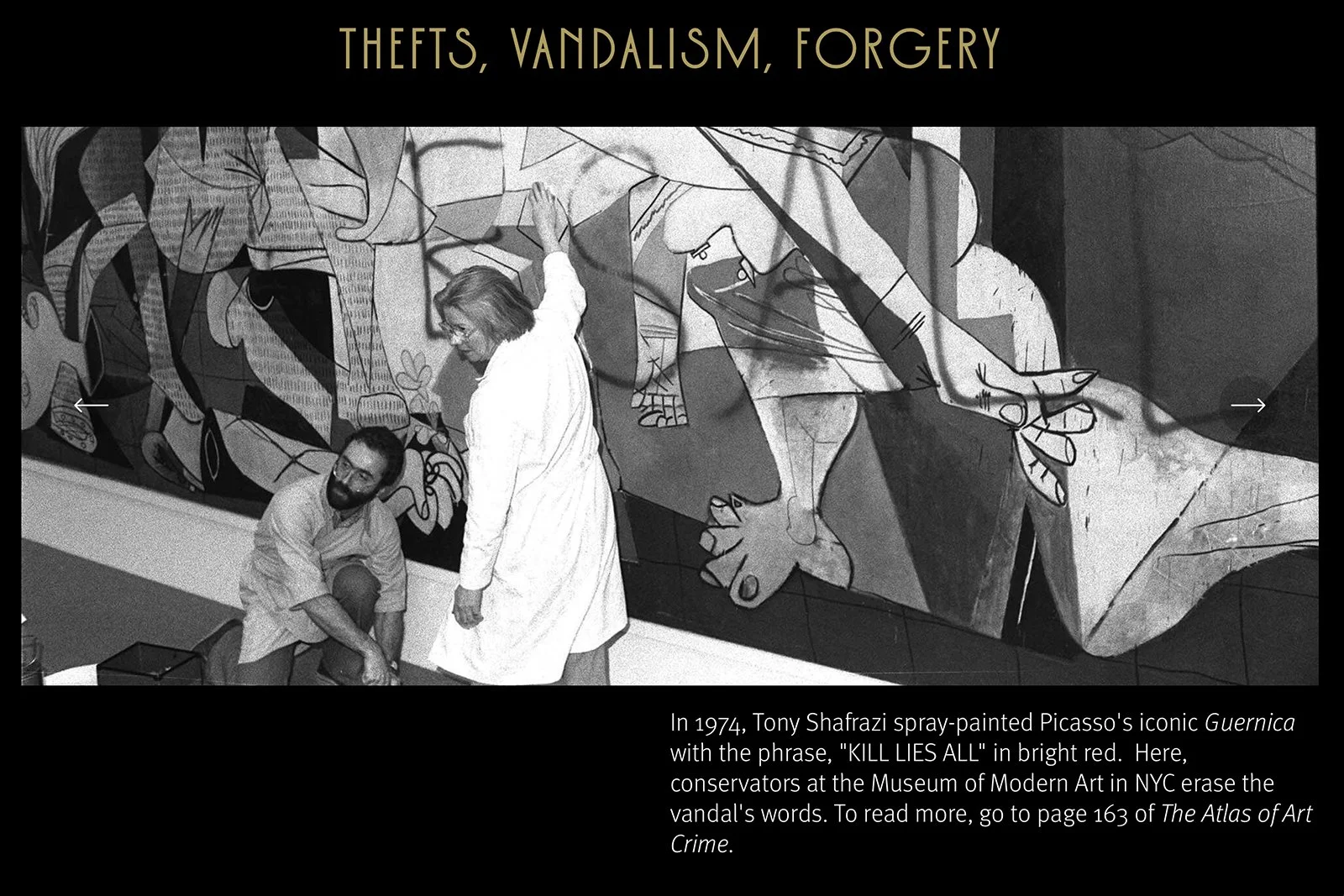
We read the book. The crime scene photographs, the courtroom portraits, the reproductions of slashed and stolen masterpieces were the site's raw material. We made the site an environment of the subject itself. Visitors encounter art crime stories directly on the homepage: a constable at the National Gallery of Victoria after the theft of Picasso's Weeping Woman, conservators at work on Guernica, the slashed Rokeby Venus. The book's content surfaces throughout. Page references point readers deeper into the volume.
The visual direction draws from two overlapping registers. Dark academia sets the tone: scholarly gravity carried through decorative elements, gold detailing, and a restrained palette. Art Deco supplies the formal vocabulary, rooted in the period when the modern art market expanded and art crime became a recognized phenomenon.
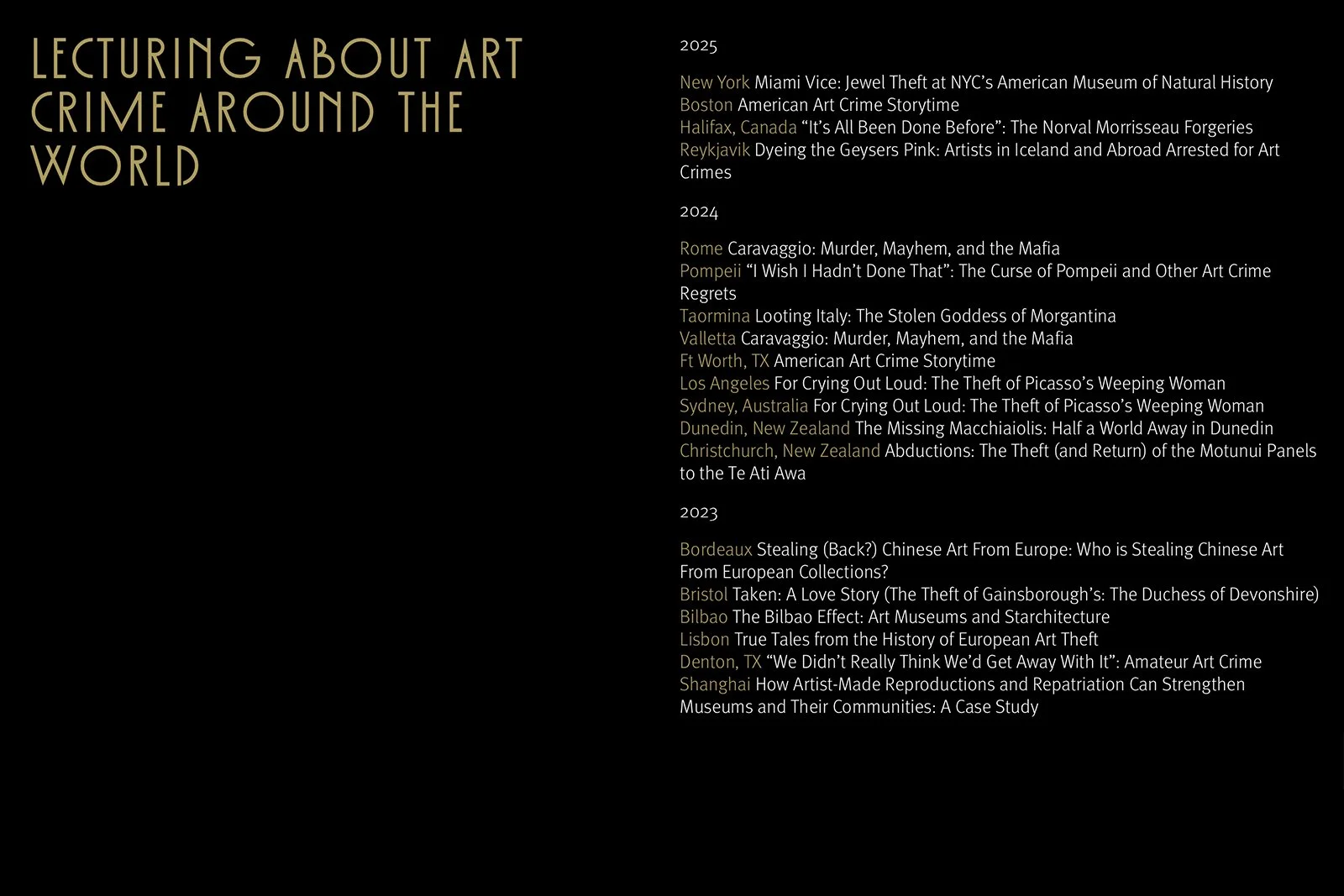
The speaking page carries the same principle. Listed by year and city, each entry pairs a location with a lecture title drawn from a local art crime: Caravaggio: Murder, Mayhem, and the Mafia in Rome, Missing: The Theft of The Mona Lisa in Paris, Losing Their Marbles? in London. The page reads like an itinerary and a bibliography at once.

Typography:
The type system operates in three layers. FF You Can Read Me, designed by Phil Baines for FontFont, appears in gold over photographs. The bottom of every letterform is missing. The text is partially illegible. On a site about stolen and hidden things, the effect is pointed. Laura responded to this immediately and it became the site's signature gesture.
Below each photographic section, the same word reappears in Monterio, an all-caps Art Deco sans-serif by Creative Corner Studio. What was cryptic becomes clear.
FF Meta Pro by Erik Spiekermann handles the body text, steady and readable against the other two.
Squarespace build:
The entire site runs on native Squarespace features with no custom code. Laura updates speaking dates, media appearances, and content on her own.
Results:
Laura went from no public presence to a site that puts visitors inside her subject before they have ordered the book.
“You can trust Denys with your dreams. He is a digital wizard who is able to x-ray vision into the heart of what is important to you and your work and to make that visual in the form of a website. He totally understood what I was hoping for with my website and brought it to life in a stunning way. If that wasn't enough, he is a clear communicator, an invaluable thought partner, and a wonderful human being.”
– Laura Evans